
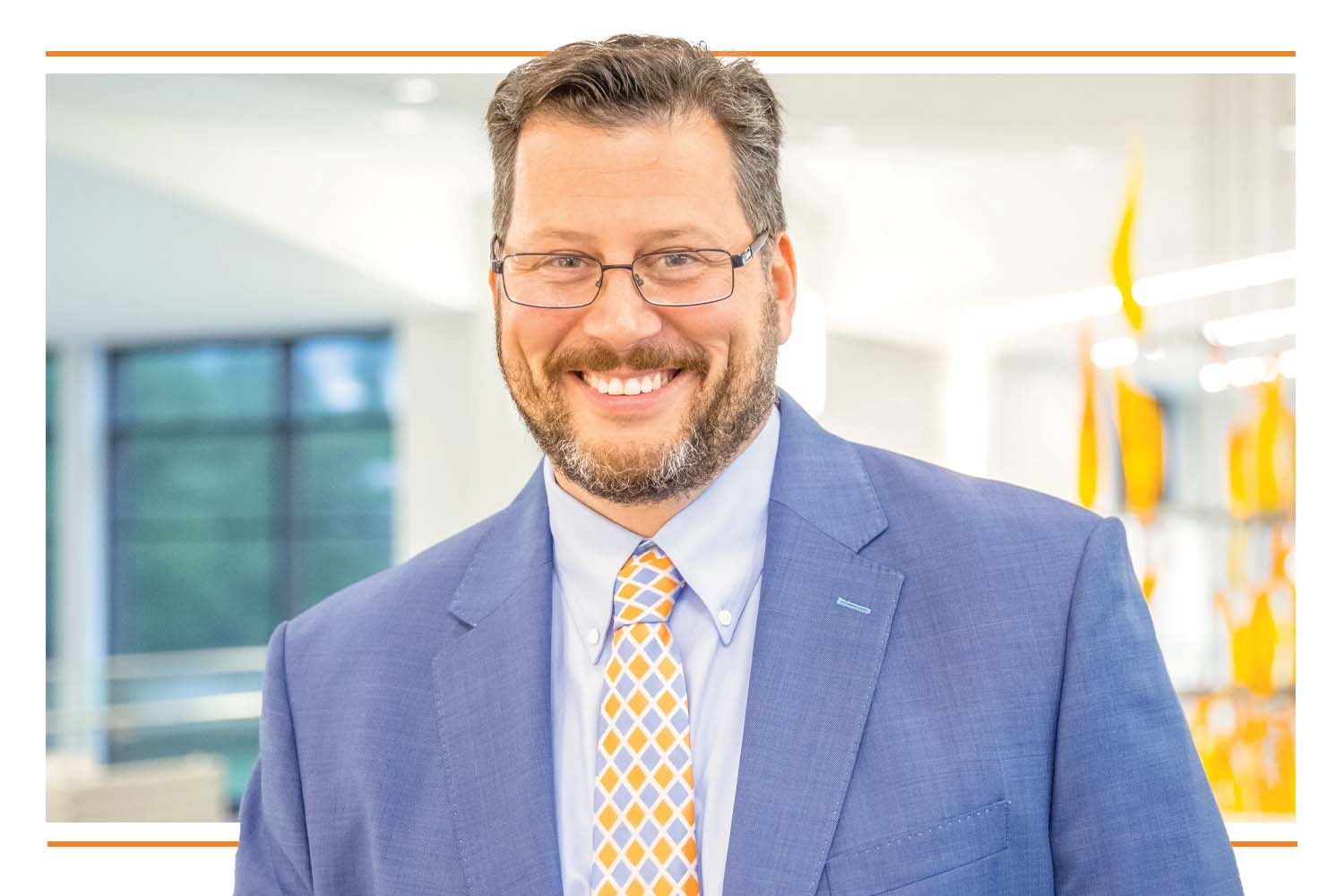
At the Tickle College of Engineering, we often talk about the tremendous overall growth we have had over the last five years, but our growth is also purposeful, and aligned with the University’s land-grant mission to support our state, nation, and the engineering profession itself through high-impact and translatable research and the production of a world-class engineering workforce.
Over the past several years, our college has experienced remarkable advancement in enrollment, research productivity, student success, and industry engagement. Yet what excites me most is not the numbers alone. It is our focus to build a college where engineering innovation serves people, where discovery translates into impact, and where students are prepared to lead in increasingly complex, dynamic, and interdisciplinary environments.
This issue reflects that mission in action.
Projects like CEE Professor John Hathaway’s remind us that engineering is ultimately about improving quality of life and expanding access to resilient, sustainable solutions. His work developing substitute rain garden systems is designed to help underserved communities better manage stormwater infrastructure.
Our faculty continue to push the boundaries of discovery through exciting and innovative collaboration. Researchers studying the magnetism of bees are uncovering new insights into biological navigation and environmental sensing—an example of the kind of cross-disciplinary curiosity that defines engineering research at the boundaries of disciplines at Tennessee.
Our commitment to advanced manufacturing and national competitiveness is equally evident in the mission of the Defense Development and Applied Research Center or DARC. As supply chains evolve and national security priorities intensify, the ability to rapidly produce advanced materials and mission-critical parts anywhere in the world has become essential. The college is uniquely positioned at the intersection of manufacturing, materials science, energy, and defense partnerships to meaningfully contribute to our national security through this growing ecosystem.
At the same time, we remain deeply committed to transformational student experiences. Alumni such as Joshua Dobbs (BS/AE, ’17) and the life-changing launch experience illustrates the kind of hands-on, high-impact learning environment we are striving to create across the college. Our students are not simply studying engineering—they are practicing it in real-world settings that build confidence, creativity, and leadership.
These stories also reflect a broader strategic direction for the college. We are investing heavily in modern laboratories, expanding partnerships with national laboratories and industry, launching new interdisciplinary initiatives, strengthening experiential education, and continuing to recruit world-class faculty. We have launched a new strategic planning process specifically built around our undergraduate programs across the college, to make sure we maintain a modern and elite education that will equip our graduates with world-class engineering, critical thinking, and professional skills needed for the future.
The future of engineering will belong to institutions willing to think boldly, move collaboratively, meet the pace of change, and solve consequential problems. At UT, we are embracing that responsibility with energy, optimism, and unrelenting Big Orange determination.
Go Vols,
Matthew Mench
Dean and Wayne T. Davis Chair
Tickle College of Engineering
Follow me on Instagram @deanengtce