

K-2 Nuclear Education Initiative
The Department of Nuclear Engineering is part of a groundbreaking statewide initiative to help introduce nuclear energy concepts to kindergarten through second grade classrooms. Faculty members worked in collaboration with the Tennessee STEM Innovation Network (TSIN), the Tennessee Department of Economic and Community Development, North American Young Generation in Nuclear, and leading energy advocates to launch the five-year program, which supports Governor Bill Lee’s vision to position Tennessee as the nation’s leader in nuclear innovation and workforce readiness. More than 280 elementary teachers from across the state will be trained to deliver age-appropriate, inquiry-based energy education that demystifies nuclear power and lays the foundation for future interest in clean energy careers. The TSIN “Powering our Town” K-2 nuclear energy curriculum is the first of its kind in the United States focused on early learners. Beyond the science instruction, the nuclear energy classroom initiative is a strategic investment in Tennessee’s future energy workforce. By introducing the principles to K-2 classrooms, the program hopes to build a long-term pipeline of students who will be prepared to solve future energy challenges.
Tech Innovations Mark Halfway Point of Grant
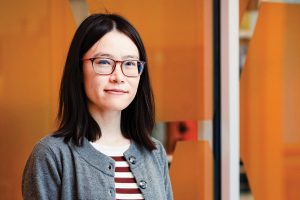
Atrial fibrillation (AF) is an irregular heartbeat disorder caused by misfiring cardiac nerves that can increase the risk of stroke, heart failure, and even death. AF affects an estimated six million adults in the United States. AF can be treated with a type of surgery called ablation, wherein surgeons carefully scar heart tissue in multiple places to block the erroneous nerve signals. Unfortunately, the difficult and time-intensive procedure has a success rate just above 50 percent. ISE Assistant Professor Bing Yao, an expert in physics-informed machine learning (ML), believes that next-generation technologies are the key to better patient outcomes. In 2023, she and Pennsylvania State University Professor Hui Yang were awarded a four-year, $1.1-million grant from the National Science Foundation–National Institutes of Health Smart and Connected Health program to develop an ML-enabled system that would turn individual patient data into personalized AF ablation recommendations. Now halfway through their grant, the researchers have created a physics-based, 3D simulation model of the heart that can accurately predict how electrical signals spread through cardiac tissue. They have also developed several software innovations allowing their model to make recommendations for sequential ablations, adjusting to changes the heart undergoes throughout treatment.
Abel Awarded $1.7M for Cell-free Biomanufacturing Research
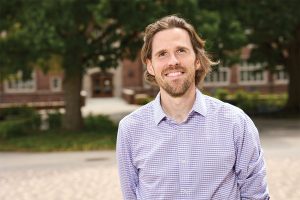
Associate Professor Steve Abel (CBE) has spent more than a decade using computational and theoretical tools to understand the physical processes that underlie molecular interactions in cell biology. That experience made him a perfect fit for the National Science Foundation Advancing Cell-Free Systems Toward Increased Range of Use-Inspired Applications (CFIRE) initiative, an intensive workshop dedicated to helping experts from different fields jointly develop research projects that would further cell-free biomanufacturing. Abel applied to CFIRE in 2024 and was one of only 37 experts invited to attend from across industry and academia. Four of the projects were ultimately funded, including the two Abel helped develop. Abel is a co-principal investigator on a $7.6 million project led by UC-Irvine that will use liquid phase separation to create locally specialized environments for different enzymes within a single bioreactor. He is also a participant in CFIRE’s largest grant, a $9.2 million project headed by Georgia Tech that will design modular metabolic reaction networks for cell-free production of a variety of molecules. Abel and his lab members will receive a total of $1.7 million over the next three years for their contributions to both projects.
Loeffler, He Published in Nature
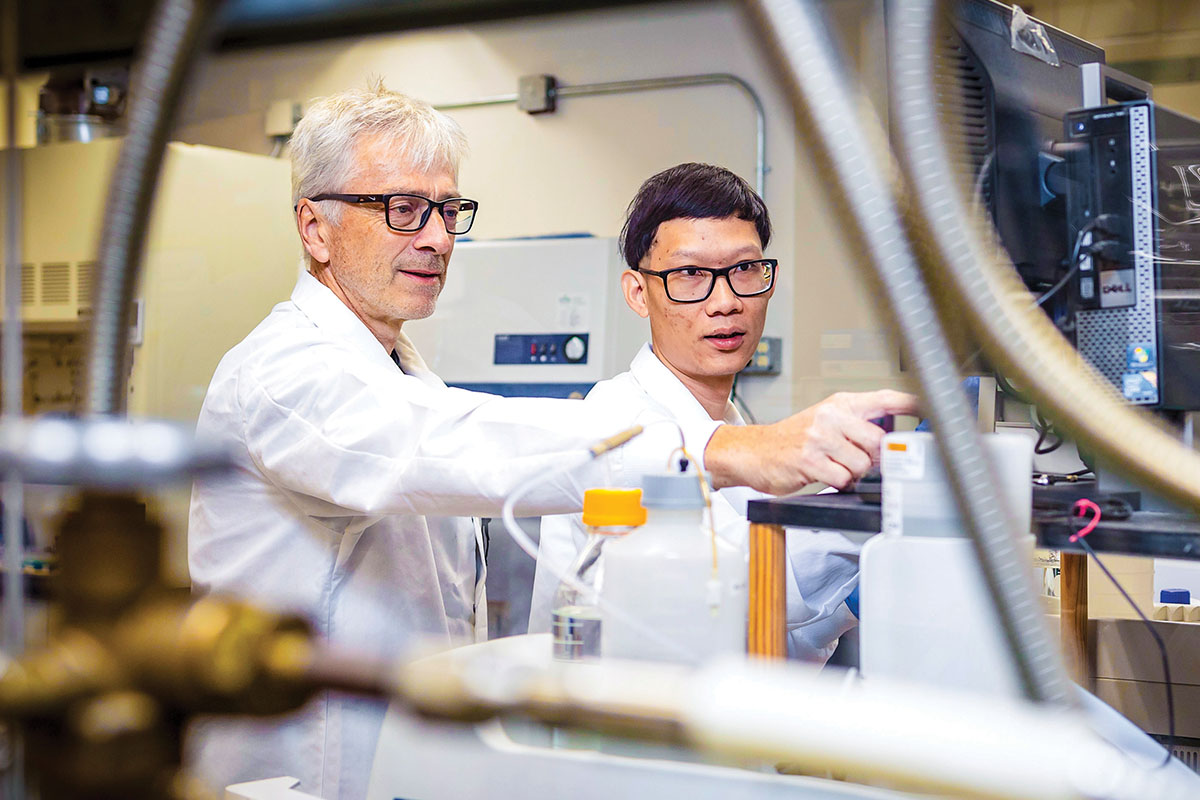
CEE Postdoc Guang He and Professor Frank Loeffler discovered a novel protein family that microbes use to consume a potent greenhouse gas. Their results, published in Nature earlier this fall, have already garnered international attention, recontextualizing previous research studies and potentially impacting scientific models of both the nitrogen cycle and greenhouse gas emissions. Within days of their publication, He got requests from labs across the U.S., Europe, and Asia asking for his methodology so they could apply it to their own studies. Some older publications have already surfaced showing similar sequences which were not recognized as N2ORs at the time. The new protein’s inclusion in genomic reference libraries also means that other N2ORs from the previously unrecognized lineage will be properly identified going forward.
Cherry, Pulgar Receive Fulbright Awards
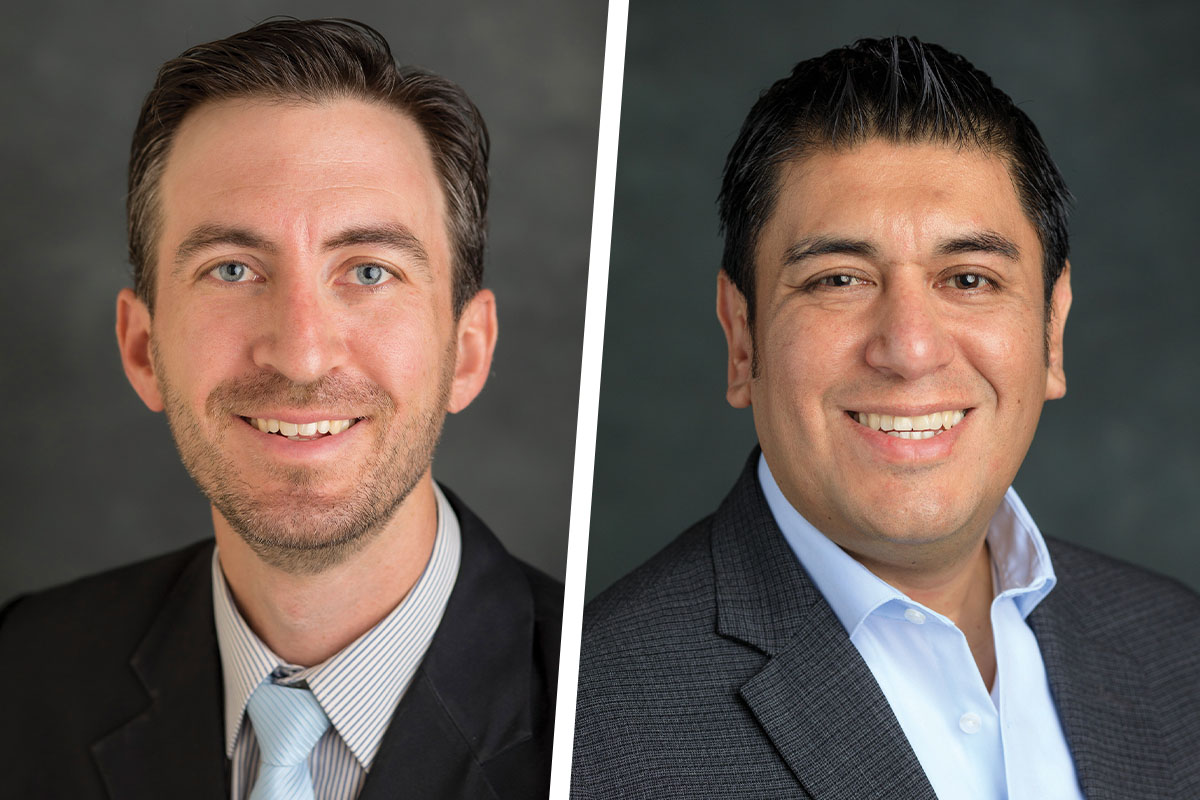
Two faculty members from the college have been selected to receive Fulbright U.S. Scholar Program awards for the 2025-26 academic year from the U.S. Department of State and the Fulbright Foreign Scholarship Board. Professor Christopher Cherry (CEE) and Associate Professor Hector Pulgar (EECS) will be traveling abroad to perform research in their areas of expertise and broaden their cultural worldview. Fulbright U.S. Scholars are faculty, researchers, administrators, and established professionals teaching or conducting research in affiliation with institutes abroad. Fulbright Scholars engage in cutting-edge research and expand their professional networks, often forging future partnerships between institutions. Cherry will travel to Rwanda for five months as part of Fulbright’s Africa Regional Research Program, investigating the electrification of small vehicles, including e-bikes, e-trikes, and e-motorcycles, in urban and rural Rwanda. Pulgar will spend six months at the Universidad Carlos III de Madrid in Spain. His project will focus on making electric power systems more reliable and environmentally friendly by improving the integration of renewable energy sources into the electricity grid. Because renewable energy sources do not produce power in a steady, predictable way like traditional power plants, the grid can become less stable and more prone to blackouts.

Liu Wins Fifth R&D 100 Award
UT-ORNL Governor’s Chair Professor for Power Grids Yilu Liu has won her fifth R&D 100 Award in the last six years. For more than six decades, the R&D Awards have served as the most prestigious worldwide science and innovation competition that recognizes new commercial products, technologies, and materials for their technological significance that are available for sale or license. Liu’s most recent award recognizes the Universal GridEdge Analyzer (UGA), which is a real-time, highly accurate, and GPS-synchronized power grid monitoring device used at distribution level that can help improve the security and resilience of the nation’s energy infrastructure. The UGA enhances the situational awareness capabilities for electric power grid operators, end-users, and researchers, allowing them to access the health of the power grid in real time on their mobile devices. The UGA is an updated version of past grid monitoring devices Liu has developed over her 20 years in the grid monitoring field. It’s the first design made entirely at the University of Tennessee, which makes it more cost efficient. The UGA has added features that can process more information to keep up with faster power electronic devices of the modern age.